Enterprise hiring priorities are shifting—but not in the way many predicted.
According to Ceipal’s 2026 In-Demand Jobs Report, organizations are not racing to replace legacy systems in favor of flashy new technology. Instead, they are modernizing with discipline, focusing on stability, continuity, and incremental transformation. That shift is reshaping hiring demand across IT and engineering, and placing a premium on professionals who can bridge business and technology.
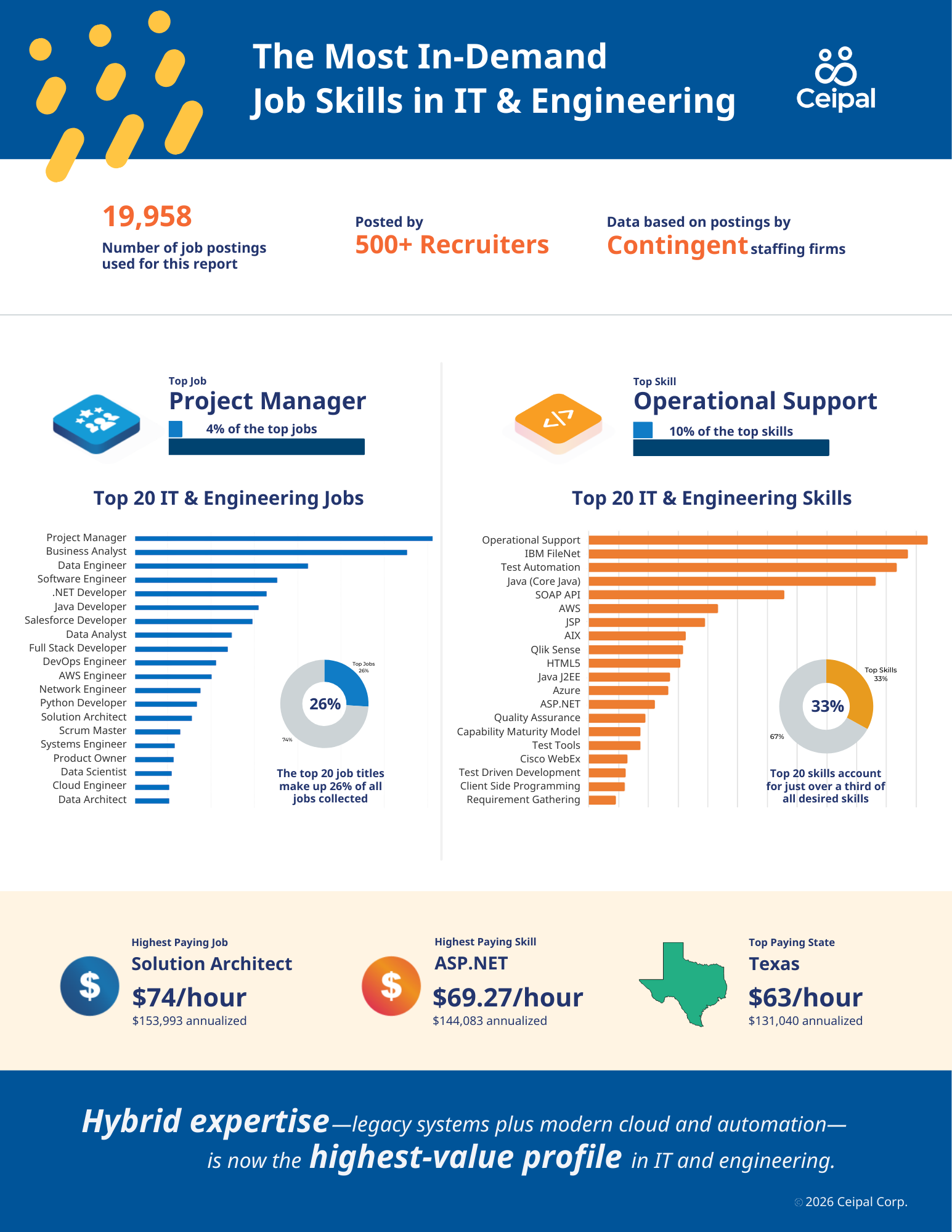
Based on an analysis of nearly 20,000 IT and engineering job postings, the report reveals a market defined less by disruption and more by balance. At the center of that balance: Project Managers, now the most in-demand role heading into 2026 and a clear signal of how enterprises are approaching change.
Why Project Managers Are Leading Hiring Demand
Project Manager roles ranked first among all IT and engineering jobs analyzed, surpassing Business Analysts, Data Engineers, and Software Engineers. Together, Project Managers and Business Analysts account for more than a quarter of the most in-demand roles nationwide.
This surge reflects a broader reality: modernization initiatives are complex, multi-layered, and deeply tied to existing systems. Organizations need leaders who can coordinate across stakeholders, manage risk, and deliver results without disrupting mission-critical operations.
As Sameer Penakalapati, Founder and CEO of Ceipal, explains: “Enterprises are modernizing with intention, not ripping and replacing. The strongest demand is for leaders who understand both legacy environments and modern platforms, and know how to move organizations forward without disrupting what already works.”
Project Managers sit at that intersection—translating strategy into execution, aligning teams, and ensuring transformation efforts deliver immediate business value.
Other Key Takeaways
There were several other striking findings in the 2026 report.
Operational Support jumped from No. 16 to No. 1 as the most in-demand skill.
Hybrid skill sets emerged as the new gold standard, blending legacy tools, cloud expertise, and business acumen.
Texas leads the nation in both job volume and highest pay.
Click here to explore the other findings in the report.
What This Means for Employers and Recruiters
For employers, the 2026 findings signal a need to rethink hiring strategies:
Skills matter more than titles. Job titles vary widely, but underlying skill combinations are becoming more consistent.
Adaptability beats specialization. Narrow expertise is less valuable than cross-functional capability.
Modernization is ongoing. Demand will remain steady for professionals who can integrate, extend, and stabilize enterprise systems rather than replace them.
For staffing and recruiting teams, this reinforces the importance of a skills-first approach. Understanding which skills persist, how they evolve, and how they connect to business outcomes is critical for delivering the right talent—faster.
The Outlook for 2026 and Beyond
Looking ahead, the IT and engineering labor market is expected to remain resilient but increasingly selective. Employers are consolidating requirements, reducing tolerance for long ramp-up periods, and prioritizing candidates who can deliver value on day one.
Cloud hiring has matured. Automation and testing will continue to rise in importance. And experienced professionals who understand both system constraints and modernization strategies will remain in highest demand.
In short, the future of hiring isn’t about transformation at any cost—it’s about progress with precision.




-p-1080.png)